November 20, 2026
As crews worked their way through the historic framework during the complete renovation of Mayville State University’s iconic Old Main building, they uncovered more than just brick and timber. From intricate mortise and tenon intersections to forgotten objects, each phase of demolition and reconstruction revealed unexpected glimpses into the building’s past. For PCL/Community Contractors teams, the surprises discovered inside Old Main have made the experience especially memorable. PCL/Community Contractors serves as the Construction Manager at Risk for the project.
“When I see something done in this era, the way they put the building together is impressive,” said Jeff Lorber, who served as the site superintendent for the majority of the project. “Everything was cut by hand, which is difficult even today with modern technology, so it’s especially cool given that it’s from 130 years ago.”
What started as a straightforward renovation has turned, in some corners of the building, into a kind of time capsule, offering reminders of Old Main’s long-standing role in MSU’s campus life.
MSU had knowledge about a few items in the building before PCL/Community Contractors began demolition, such as a mural in the basement. One of the first finds, the mural had been covered up with another mural painted on canvas and set off with a wood frame. Teams were careful when they began work in that area. They cleaned up the space and preserved the underlying mural for photographers to document before proceeding with demolition.
The mural, painted directly onto the wall, was signed by the artist, Otto S. Nielsen from Detroit Lakes, Minn. It is not dated, but it has been estimated that the mural was painted in the 1940s. Efforts to locate the artist or family members were unsuccessful.
Staff and faculty cleared the building before the project began, but many items that were tucked behind walls or buried under floorboards were missed and unexpectedly discovered by construction crews.
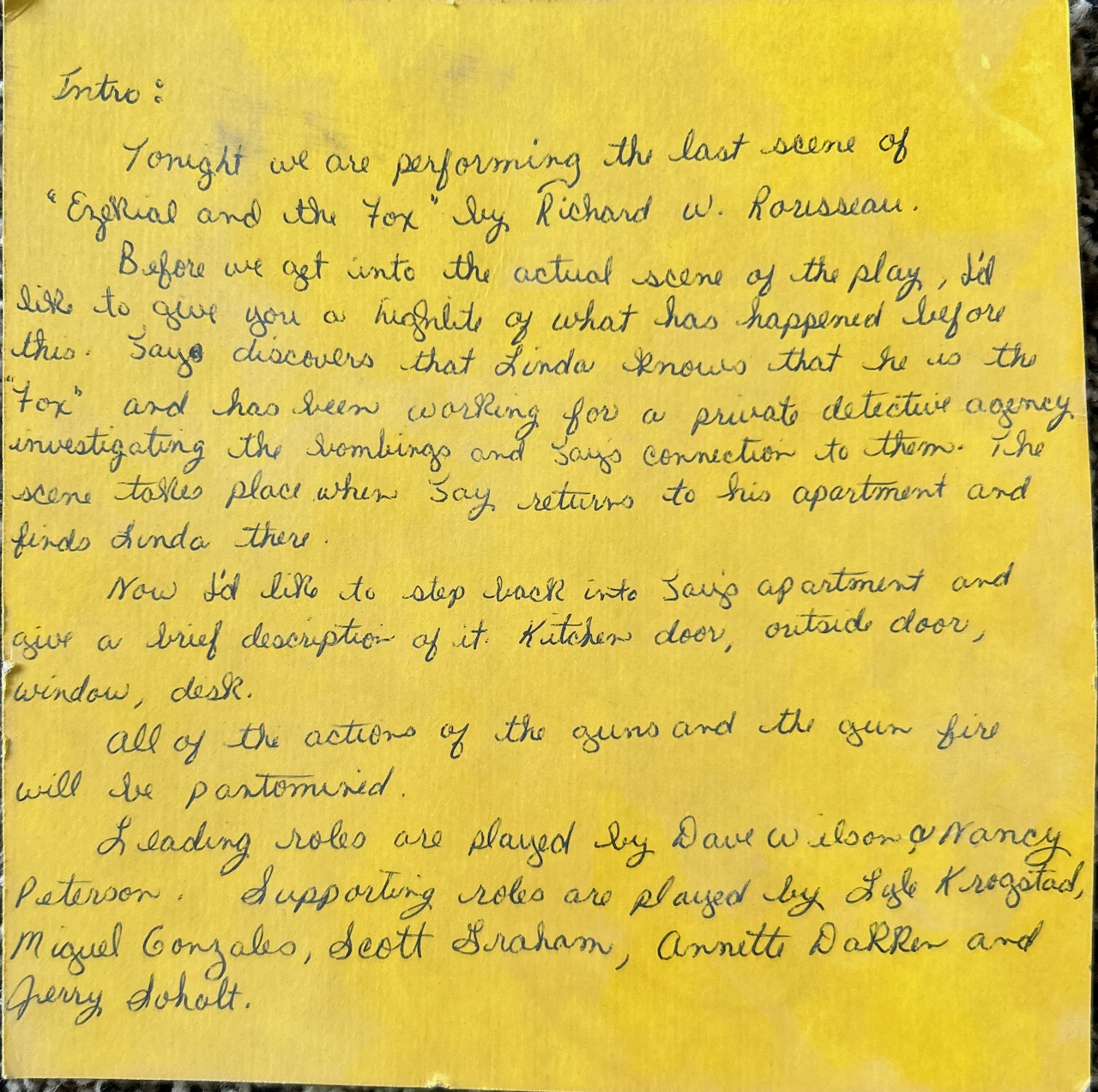
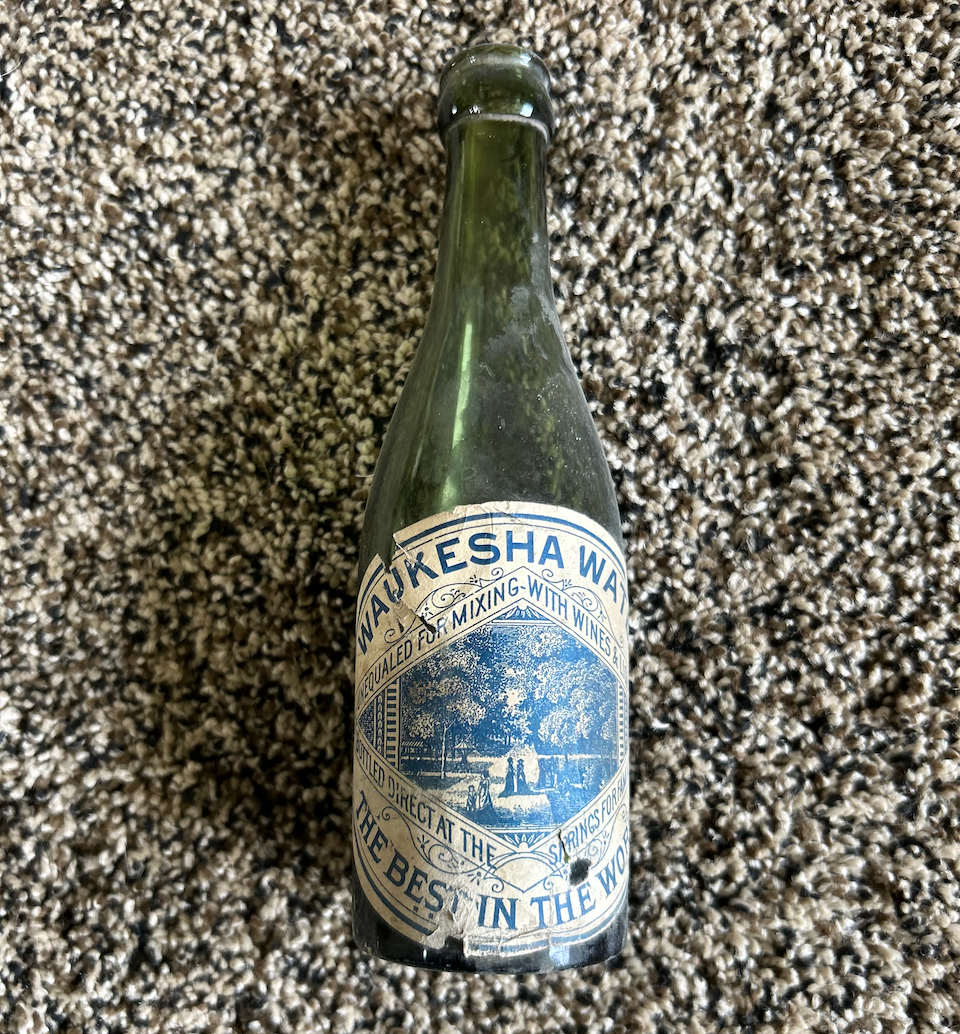
Found artifacts include old Bibles, beer cans, liquor bottles, and owner’s manuals from equipment dating to the 1940s. A student ID from 1991 was uncovered under the auditorium chairs, along with a letter to someone named Jerry. There were notes on a yellow notepad that appear to be an introduction to a play. The words say, “Tonight we are performing the last scene of ‘Ezekial [sic] and the Fox’ by Richard W. Rousseau.”
Richard Rousseau is a 1969 Mayville State graduate who earned a major in English and a minor in speech and theater. He was inducted into the Mayville State Performing Arts Hall of Fame in 2018.
The written introduction includes the names of “Ezekial and the Fox” actors. Leading roles were played by Dave Wilson and Nancy Peterson. Supporting roles are played by Lyle Krogstad, Miguel Gonzales, Scott Graham, Annette Dakken, and Jerry Soholt.
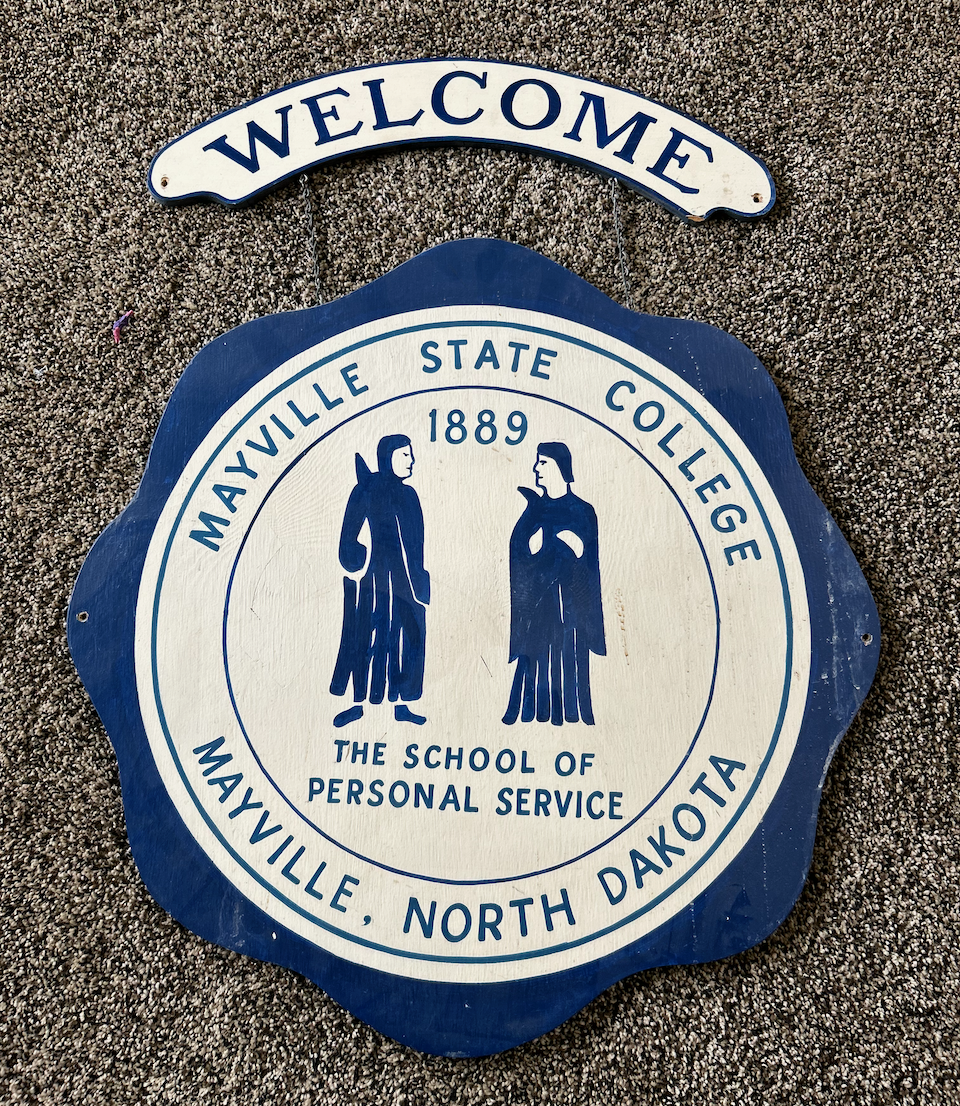
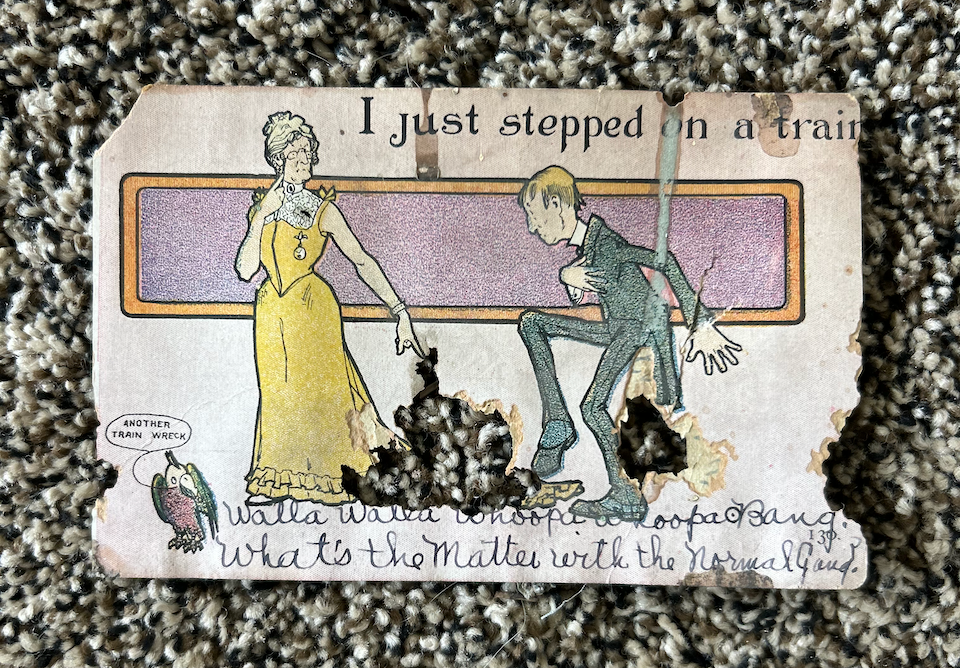
Crews also found a partially deteriorated postcard. Lorber said they did a Google search on it and believe it’s from 1912. It contains a handwritten note from a woman named Ms. Martha M. Walker. They also came across a hand-painted Mayville State sign and the Seal of the President of the United States painted on a 4x4 sheet of plywood, probably a prop used in a play.
Also discovered were the wood columns that separated rooms of the original Mayville State library which was located on the second floor in Old Main. The columns had been enclosed when sheetrock walls were built around them at some point in time. This discovery prompted some re-working of plans so the beautifully preserved columns could be exposed and remain a part of the renovated Old Main.
In addition to long-lost artifacts, construction teams uncovered Old Main’s original brick. Sections of the interior brick have been left exposed in the renovation process, a nod to the historic charm of the building, while the building has been modernized to best serve today’s students and generations to come.
“The old exterior brick needed a lot of TLC, like tuckpointing and masonry restoration all over the place,” Lorber explained. “Brick does not like water or else it deteriorates, so the masonry restoration crew worked for several months.”
After crews finished this work, the exterior brick looks original. It received a high-performance coating before the building was painted again.
Throughout the renovation process, Lorber and his crews have given regular tours of Old Main. Tour groups of anywhere from five to 50 people have walked through the building periodically to see the progress. With an emphasis on safety, including a briefing, personal protective equipment kits, and intentional routes that kept those on the tour away from falls or overhead hazards, people were able to get a sense of the vision for Old Main.
The hidden details revealed through the Old Main renovation remind the MSU community of why this building has mattered to generations of students, faculty, and staff. For more than a century, it has stood at the heart of campus life, and every beam, artifact, and carved corner has offered a glimpse into the past.
While its original form has changed, the building’s spirit remains intact. When the doors open again soon, Old Main will still be the same beloved landmark, now ready to serve the next chapter of MSU life with renewed purpose and pride.
The public is invited to join in celebrating the grand reopening of Old Main on Thursday, December 10, 2026. Beginning at 5 p.m., the evening will include the lighting of the Christmas tree in front of Old Main, a tradition that began in 2025. A formal program will follow, along with opportunities for tours of the building and more. A light dinner will be served in the Campus Center Luckasen Room from 6 to 7:30 p.m. Those who plan to attend should RSVP at www.mayvillestate.edu/grandreopening.